




What are the differences between blackheads and whiteheads? Causes, treatments, and tips
What are the differences between blackheads and whiteheads? Causes, treatments, and tips
If you ever look into the mirror by yourself, you may see a tiny bump that is black in color (which is not painful) or white in color, which is a bit painful, on your face, especially on your chin, nose, and cheek. and sometimes on your body, especially on your shoulder and back. Those are called blackheads (open comedones) and whiteheads (closed comedones). Both are types of comedonal acne. You may wonder why they come to you and how to get rid of them. You are not alone in suffering from this condition; almost every adult and even teenager has suffered from this problem. By understanding the differences between blackheads and whiteheads, you can choose the right skin care and prevent making them worse by using the wrong products and habits. In this blog, I will help you to find out the key differences between blackheads and whiteheads, their causes, proven treatments, and best product recommendations. So, let’s find out together.
What is a blackhead, and why does it happen?
Blackheads, also known as open comedones, are small, dark bumps that grow when your pores become clogged with sebum, dead skin cells, and other impurities. If the person produces more oil and excess sebum, it can lead to clogged pores and cause blackheads. The black color is not dirt but the result of oxidation. When the pore opens to the surface and the trapped material is exposed to air, it oxidizes and turns black. That’s why they’re called blackheads. We can see blackheads everywhere on the skin, especially on the face, like in the T-zone area.
What is a whitehead, and why does it appear?
Whiteheads, also known as closed comedones, are clogged pores on the skin's surface. Because the debris inside is not exposed to air, it does not oxidize like blackheads and hence remains white or flesh-colored. Whiteheads are a type of acne that can be inflammatory. It may be caused by your pores, or there may be an overproduction of sebum, hormones, or lifestyle factors.
What are the differences between blackheads and whiteheads?
They may look so different by their characteristics, but they are both forms of acne and can differ by the size of the open pores. Blackheads turn dark because the cells and sebum inside the pore are exposed to the air. This causes the melanin in the mixture to oxidize, resulting in darkening. Whiteheads often form in smaller pores so that oxygen cannot access the mixture beneath the epidermis, preventing it from oxidizing. If acne bacteria are present beneath the skin, a red papule might emerge, resulting in inflammatory acne.
What are the best ingredients to remove blackheads and whiteheads effectively?
There is no one-size-fits-all solution for blackheads and whiteheads, because they both respond differently to the treatments. I will guide you to which ingredients to look for and how to use them in the right way.
For blackheads, look for ingredients like
Salicylic acid (BHA) can help to gently exfoliate and dissolve oils from deeply inside pores
Alpha Hydroxy Acids (AHAs) like Glycolic and Lactic Acid, which can deeply work on the skin surface by breaking the connections that hold dead skin cells together. This prevents accumulation, which can clog pores and cause blackheads.
Lactic acid can be helpful in removing blackheads. It is an alpha hydroxy acid (AHA) that helps to exfoliate and unclog pores, which contribute to blackheads. It is also useful for those with sensitive skin due to its gentler exfoliating properties compared to other AHAs like glycolic acid.
Retinoids (retinol, adapalene, and tretinoin) can speed up cell turnover, preventing dead skin from clogging pores. They also shrink the appearance of enlarged pores over time.
Niacinamide (Vitamin B3) can help to regulate sebum production, balance oil, and strengthen the skin barrier by making it harder for blackheads to form.
Pro Tip: Use oil-based or gel-based cleansers for your first cleanse and follow up with foam cleansers for double cleansing to break down oxidized sebum production.
For whiteheads, look for the ingredients like
- Unlike blackheads, salicylic acid (BHA) is oil-soluble, which allows it to enter pores and remove excess sebum. It is especially good for whiteheads that grow in greasy areas.
- Benzoyl peroxide (low strength, 2.5% - 5%) can eliminate acne-causing bacteria and lower inflammation, making it useful when whiteheads are about to turn into angry pimples.
- Azelaic acid can help to clear clogged pores, soothe inflammation, and even out skin tone. Particularly good for sensitive or rosacea-prone skin because other harsher acids might be irritating.
- Retinoids (retinol, adapalene, and tretinoin) are the most effective treatment for whiteheads and blackheads. They increase cell turnover, clear clogged pores from the inside, and prevent future blockages.
Pro Tip: Avoid squeezing or picking blackheads and whiteheads because it can cause scarring, infection, and worsen acne.
How to prevent causing blackheads and whiteheads?
When it comes to blackheads and whiteheads, prevention is better than cure.
- Do a double cleanse at night to remove sunscreen, makeup, and pollutants to prevent buildup.
- Exfoliate 1 to 2 times per week by using AHA/BHA chemical exfoliation instead of using harsh scrubs that can lead to irritation and skin barrier damage.
- Choose non-comedogenic products to avoid clogging pores, especially for moisturizers and sunscreens.
- Stay consistent and patient because breakouts can be improved with doing the right skin care routine, not overnight fixes.
- Try to have a balanced diet, and avoid eating dairy and high-glycemic foods, which can worsen comedones.
Common Question I often get
- Can we have both blackheads and whiteheads at the same time?
- Yes, it’s very common to have a mix, especially in the T-zone, because it’s the most oil-productive area.
- Are blackheads permanent?
- No, if you treat and maintain them, but they may return if the cause is not addressed.
- Can diet affect comedones?
- Yes, high sugar, dairy, and processed foods may contribute to excess oil production.
Best product recommendation
If you’re struggling with stubborn blackheads, recurring whiteheads, or clogged pores, the LUMOS Acne Serum is a powerful yet skin-friendly solution. This serum is formulated with salicylic Acid (BHA), retinol, sodium hyaluronate, Ca Cannabis Sativa Seed Oil, Resveratrol & Ascorbic Acid (Vitamin C), Botanical Extracts, and Beta-Glucan, designed with a smart blend of exfoliating acids, antioxidants, and soothing botanicals that not only clear your pores but also strengthen your skin barrier for long-term clarity
LUMOS Acne Serum works on multiple levels by
- Unclogs pores to treat existing blackheads & whiteheads.
- Prevents new breakouts with a combination of salicylic acid and retinol.
- Hydrates & calms so your skin never feels tight or irritated.
- Brightens & repairs with antioxidants and natural extracts, leaving you with clearer, healthier-looking skin.
How to use Lumos Acne Serum?
- Start slow by using it 2 to 3 times a week at night, then build up as your skin adjusts to retinol and salicylic acid.
- You can apply for the whole face or specific areas of concern. Apply a thin layer directly to affected areas for faster results.
- Don’t forget to use moisturizer after use, even if your skin is oily; follow up with a lightweight moisturizer to lock in hydration.
- Don’t mix with strong exfoliants (like AHAs or scrubs) on the same day to avoid over-exfoliation.
- Always wear sunscreen in the morning because retinol and vitamin C can make your skin more sensitive to UV damage.
Lov me Touch LA PEEL 5% (Lactic Acid Peeling)
This serum can help with blackheads and whiteheads by gently exfoliating dead skin cells and clearing pores, which are essential steps in minimizing these common blemishes. By removing the buildup of dead skin cells, it helps to create a smoother skin surface and maintains an environment that helps prevent future skin troubles like clogged pores.
How to use Lov MeTouch LA PeeL 5%?
- Apply to clean skin:
Use it after cleansing your face; dry your face before applying the peel.
- Apply 2-3 pumps and leave it on for the specified time, typically for 5 minutes
- Rinse thoroughly with the warm water, which is not hot
- Follow up with a good moisturizer to help restore the skin's barrier and prevent dryness.
Pro tips: use Lov me Touch Skin Barrier Nano Milk Rich High Ceramide 15% to restore moisture and smooth the skin surface by avoiding damage to the skin barrier.
- Your skin will be more sensitive to the sun after using a chemical peel, so it's crucial to apply sunscreen daily.
Lov me Touch LA PEEL 10% (Lactic Acid Peeling)
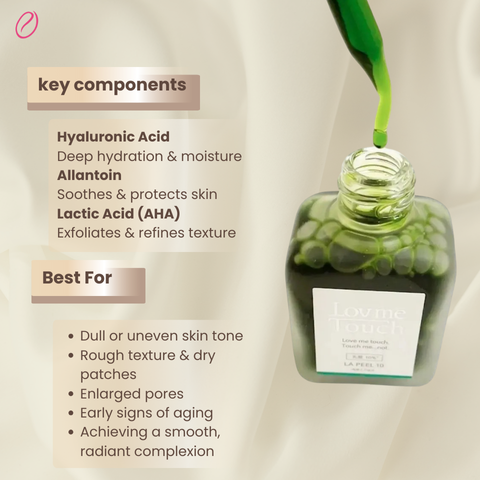
The Lov me Touch LA PEEL 10% offers gentle exfoliation using lactic acid-like AHA to reveal smoother, brighter skin, while its hyaluronic acid and allantoin components provide moisture to prevent dryness. It is so beneficial for improving skin texture, reducing the appearance of fine lines and dark spots, and refining pores for a more radiant complexion.
How to use Lov me Touch LA PEEL 10%?
- Cleanse your face by washing it to remove dirt and oil.
- Apply an appropriate amount of the Lov Me Touch LA PEEL 10% to your entire face.
- Leave it on your face for approximately 5 minutes.
- Rinse it thoroughly with lukewarm water.
- Follow up with your regular moisturizing and skincare routine to keep skin hydrated. Use Lov me Touch Skin Barrier Nano Milk Rich High Ceramide 15% moisturizing emulsion for the best results.)
- Don’t forget to apply sunscreen in the morning since this kind of chemical exfoliation can lead to sun sensitivity.
Frequency:
Use the product 2-3 times per week, or a maximum of once a day.
Consider your skin's condition and tolerance when deciding on the frequency.
Conclusion
Blackheads and whiteheads may seem like small skin concerns, but they’re often a sign that your pores are struggling to stay balanced. The key to getting clear, radiant skin isn’t using the strongest or most expensive treatments; it’s choosing non-comedogenic products that work with your skin, not against it.
By understanding the differences between blackheads and whiteheads, identifying their causes, and following a smart skincare routine with the right products, you can achieve smoother, clearer, and healthier skin.
Ready to calm your sensitive skin?
Shop Products
Leave a message
Required fields are marked *