




Ceramide vs. Panthenol: Which Ingredient Does Your Skin Need?
Ceramide vs. Panthenol: Which Ingredient Does Your Skin Need?
Have you ever looked at a skincare label and wondered whether your skin needs ceramides or panthenol? Both ingredients are well-known for supporting healthy-looking skin, but they work in different ways. If your skin feels dry, tight, sensitive, or easily irritated, understanding the difference between these two ingredients can help you choose products that better match your skin’s needs.
What Are Ceramides?
Ceramides are naturally occurring lipids (fats) found in the outer layer of your skin. They are an important part of the skin barrier, helping keep moisture in and protecting the skin from external stressors.
When the skin barrier becomes weakened, moisture can escape more easily, which may leave your skin feeling dry, rough, or uncomfortable.
Benefits of Ceramides
* Helps support the skin barrier
* Helps reduce moisture loss
* Keeps skin feeling soft and moisturized
* Supports dry and sensitive skin
* Helps improve the appearance of rough, dehydrated skin
Think of ceramides as the “building blocks” that help keep your skin barrier strong.
What Is Panthenol?
Panthenol, also known as provitamin B5, is a humectant and conditioning ingredient commonly used in skincare. It helps attract and retain moisture, leaving the skin feeling hydrated and comfortable.
Panthenol is also valued for its soothing properties, making it a popular ingredient in products designed for dry or sensitive skin.
Benefits of Panthenol
* Helps attract moisture to the skin
* Supports skin hydration
* Helps soothe the feeling of dry or irritated skin
* Leaves skin feeling soft and smooth
* Suitable for many sensitive-skin routines
Think of panthenol as a comforting dose of hydration for your skin.
Ceramide vs. Panthenol: What’s the Difference?
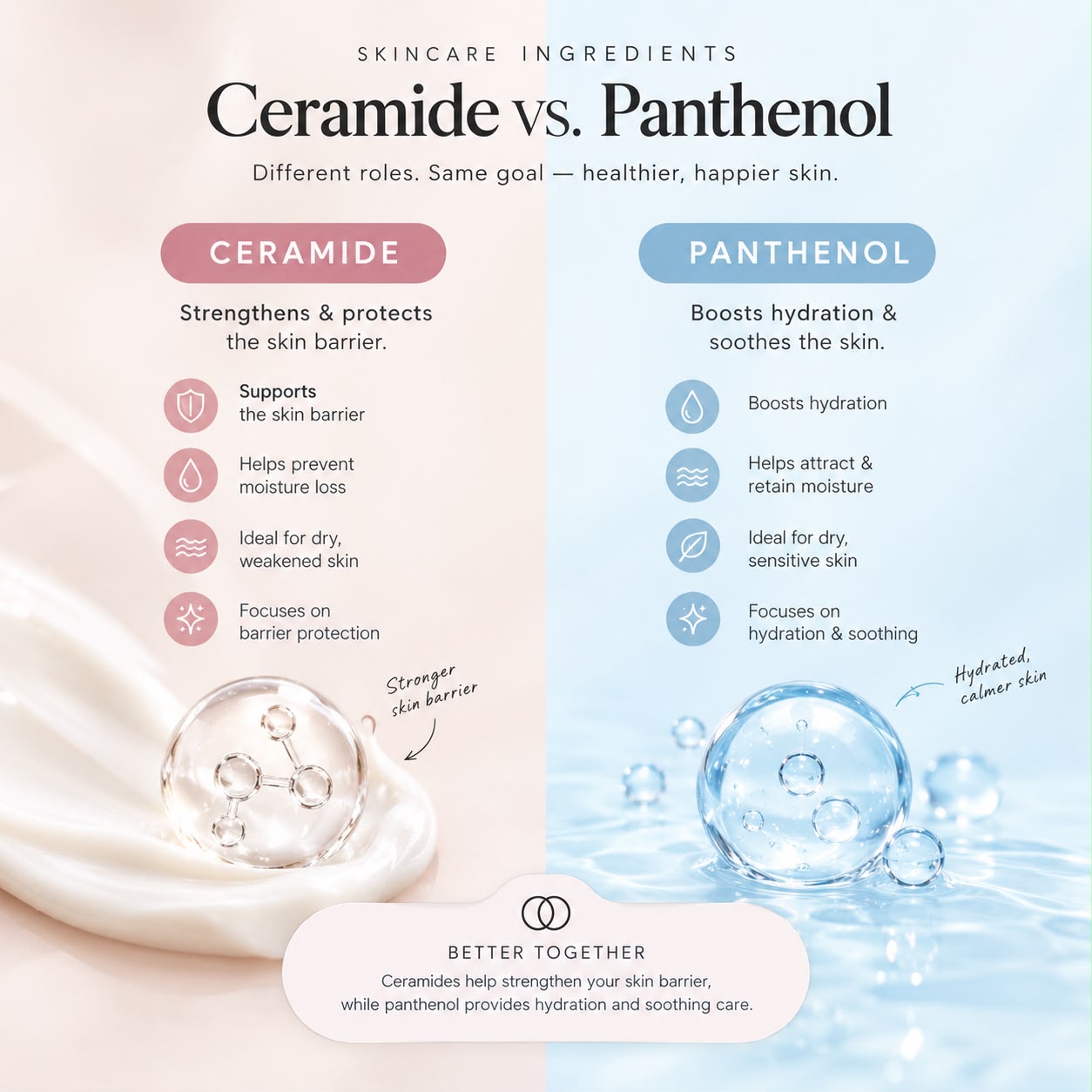
While both ingredients support the skin, their main functions are different.
Ceramides = Barrier Support 🧱
They help replenish important lipids and support the skin’s protective barrier.
Panthenol = Hydration & Soothing 💧
It helps attract moisture and can help the skin feel calmer and more comfortable.
In simple terms, ceramides help strengthen the “wall,” while panthenol helps keep the skin hydrated and comfortable.
Key Differences: Ceramide vs. Panthenol
| Ceramide | Panthenol |
| Supports the skin barrier | Boosts skin hydration |
| Helps reduce moisture loss | Helps attract and retain moisture |
| Helps strengthen and protect the barrier | Helps soothe and comfort the skin |
| Best for dry, weakened skin | Best for dry, sensitive, dehydrated skin |
Which One Does Your Skin Need?
If your skin feels dry and tight
Look for ceramides to help support the skin barrier and reduce moisture loss.
If your skin feels dehydrated or uncomfortable…
Panthenol can provide hydration and soothing support.
If your skin needs both
Why choose just one? Ceramides and panthenol can be used together and are often found in formulas designed to support hydration and the skin barrier.
Can You Use Ceramide and Panthenol Together?
Yes! These ingredients can complement each other well.
A skincare routine containing both can provide hydration, soothing care, and barrier support—especially when your skin is feeling dry or sensitive. For example, you might look for a gentle cleanser followed by a hydrating serum or toner containing panthenol and finish with a moisturizer containing ceramides.
Conclusion
Ceramides and panthenol aren’t really competitors—they each have a different job.
Ceramides focus on supporting the skin barrier, while panthenol focuses on hydration and soothing. Choosing between them depends on what your skin needs, and using both can be a great option for maintaining soft, hydrated, comfortable-looking skin.
Healthy skin starts with a healthy barrier. Give your skin the hydration and barrier support it deserves.
Related Posts:
Ready to calm your sensitive skin?
Shop Puremer Reset Ceramide Cream -Peptides & Hyaluronic Acid
Leave a message
Required fields are marked *